


An interactive endocrinology guide.
Author: Agata Zagrajczuk, DVM, PhD
Designed to help answer the following questions:
- What should be tested?
- When should samples be collected?
- How should test results be interpreted?
Quick guide for test selection
| Clinical Problem | Hormones | Sample | When to Collect Samples | Usefulness | |
|---|---|---|---|---|---|
| Granuloma Cell Tumour Diagnostics | Anti-Müllerian Hormone (AMH) | Serum 0,5 mL | At any stage of the oestrous cycle or pregnancy | optimal (determination recommended) |
|
| Testosterone (T) | Serum 1 mL | The stage of the reproductive cycle/pregnancy and seasonal factors may affect the concentration (see the test information section for details) | limited – the method is reliable only in certain cases* | ||
| Other ovarian dysfunction disorders (anovulatory cycles, ovarian inactivity, absence of oestrous behaviour) | Estradiol (E2) | Serum 1 mL | Depending on the stage of the reproductive cycle or the dysfunction, an increase or decrease in the concentration may be expected. | assessment of oestrous cycle stage and ovarian activity | |
| Progesterone | Serum 0,5 mL | Depending on the stage of the reproductive cycle or the dysfunction, an increase or decrease in the concentration may be expected. | assessment of oestrous cycle stage and ovarian activity | ||
| Pregnancy confirmation Difficulty maintaining pregnancy |
Progesterone | Serum 1 mL | Depending on the cycle phase or dysfunction a decrease or increase is expected more than 15 days after ovulation | early pregnancy diagnosis and evaluation of corpus luteum function | |
| Pregnant Mare Serum Gonadotropin (PMSG/eCG) | |||||
 Chilled Serum 1 mL Chilled Serum 1 mL |
Between 40 and 120 days of pregnancy | pregnancy confirmation | |||
| Estrone Sulfate (E1S) | |||||
| Serum 1 mL | From day 80 of pregnancy to approximately one week before parturition | pregnancy confirmation and placental function assessment* | |||
| DHP/Progesterone Ratio (Luteo-Placental Shift) |
Serum 1 mL | Approx. 100 to 120 days of pregnancy | decision on discontinuation of gestagen supplementation | ||
| Cryptorchidism / Testicular function disorders | Anti-Müllerian Hormone (AMH) | Serum 0,5 mL | Regardless of time of day / season | optimal (determination recommended) |
|
| Testosterone (T) | Serum 1 mL | Lowest values in the morning and during the non-breeding season; highest values in the afternoon and during the breeding season | limited | ||
| hCG Stimulation Test in Stallions (2x Testosterone Measurements) |
Serum (2x 1 mL) | Two blood samples collected 1–2 hours apart | optimal (recommended in case of equivocal AMH results) |
||
* See test descriptions for details
Suspicion of granulosa cell tumour
- Anti-Müllerian Hormone (AMH)
- Testosterone (T)
Other ovarian dysfunctions
- Estradiol (E2)
- Progesterone
Pregnancy assessment
- Progesterone
- Pregnant Mare Serum Gonadotropin (PMSG/eCG)
- Estrone Sulfate (E1S)
- DHP/Progesterone Ratio
(Luteo-Placental Shift)
Testicular dysfunction / cryptorchidism
- Anti-Müllerian Hormone (AMH)
- Testosterone (T)
- hCG Stimulation Test in Stallions
(2x Testosterone Measurements)
Characteristics of measured hormones
Purpose: Diagnosis of granulosa cell tumour (GCT) in mares and cryptorchidism/testicular tissue remnants in males; post-castration evaluation ( )
)
Production site / physiological role:
 granulosa cells of ovarian follicles (small follicles; decreased production of AMH in large preovulatory follicles)
Sertoli cells of the seminiferous tubules in the testes
Time for testing:
absence of estrus or irregular cycles (regnancy and normal cyclic activity do not exclude GCT)
behavioural changes ranging from nymphomania to stallion-like behaviour, but often no visible changes
typically one markedly enlarged ovary, the second ovary inactive (note that tumours may be bilateral)
higher probability in mares over 10 years of age, although it may occur at any age
absence of one or both testes in the scrotum with concurrent stallion-like behaviour
breed predisposition to cryptorchidism especially in American Quarter Horse and Percheron
Aggressive behaviour is often interpreted as a sign of a granulosa cell tumour or active testicular tissue; however, studies indicate that this correlation is weak. In such cases, laboratory-based diagnostics provide an objective tool, particularly useful when imaging or palpation findings are inconclusive.
Sample: serum 0,5 mL
Method: ELISA
Sample collection: independent of oestrous cycle stage
| Interpretation | |
|---|---|
| Healthy mares | < 4 ng/mL < 28,6 pmol/L |
| Mares with GCT | > 4 ng/mL > 28,6 pmol/L |
| Stallions – active testicular tissue | > 0,27 ng/mL > 1,9 pmol/L |
| Cryptorchidism/males with testicular dysfunction | < 0,27 ng/mL < 1,9 pmol/L |
Advantages: rapid, routine test
Limitations: severe haemolysis – the test will be cancelled, mild haemolysis may cause result distortion
Note: if results are inconsistent with clinical findings, re-testing or confirmation with a different method is recommended.
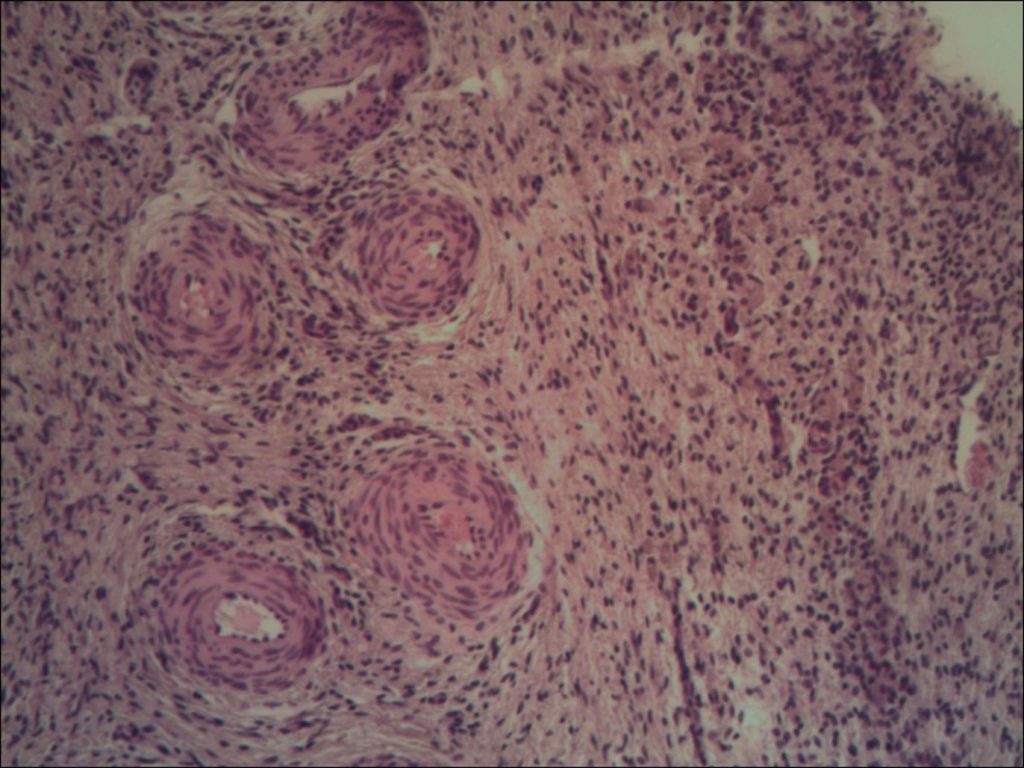
Histological image of a healthy mare’s ovary. Photo by A. Zagrajczuk, DVM, PhD
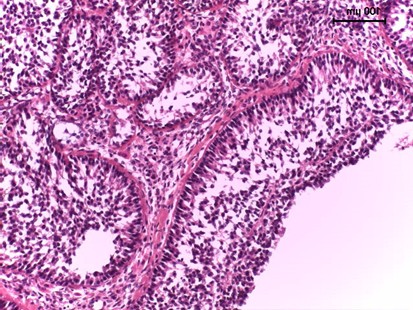
Histopathological image of a granulosa cell tumour in a mare. Photo by S. Brunk, DVM, PhD
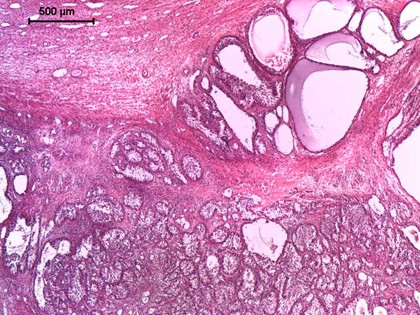
Histopathological image of a granulosa cell tumour in a mare. Photo by S. Brunk, DVM, PhD
Purpose: Diagnosis of cryptorchidism / testicular tissue remnants and assessment of testicular function in males; post-castration evaluation (), diagnosis of granulosa cell tumor (GCT) in mares
Production site:
ovarian hilus cells and theca cells of follicle
Leydig (interstitial) cells in the testes
Time for testing:
absence of one or both testes in the scrotum with concurrent stallion-like behavior
breed predisposition to cryptorchidism, especially in American Quarter Horse and Percheron
absence of estrus or irregular cycles (pregnancy and normal cyclic activity do not exclude GCT)
behavioural changes – especially stallion-like behaviour (e.g. mounting other mares), nymphomania, suggesting the presence of a theca cell component in GCT responsible for increased testosterone concentrations
typically one markedly enlarged ovary, the second ovary inactive (note that tumours may be bilateral)
usually in mares over 10 years of age, although it may occur at any age
Note – Testosterone measurement is only meaningful in cases where a theca cell component is present, associated with increased concentrations of this hormone. Its presence may be suspected in cases of somatic masculinisation (i.e. increased muscle mass, clitoral hypertrophy, “cresty neck”) and/or stallion-like behaviour, i.e. mounting other mares and flehmen response in the presence of mares during oestrous.
Aggressive behaviour is often interpreted as a sign of a granulosa cell tumour or active testicular tissue; however, studies indicate that this correlation is weak. In such cases, laboratory-based diagnostics provide an objective tool, particularly useful when imaging or palpation findings are inconclusive.
Sample: serum 1 mL
Method: RIA
Material collection:
in there are diurnal and seasonal variations in the concentration
in the concentration physiologically increases during oestrus
| Interpretation | |
|---|---|
| Stallions/cryptorchidism – active testicular tissue | > 0,13 ng/mL > 130 pg/mL |
| Cryptorchidism/males with testicular dysfunction | < 0,13 ng/mL < 130 pg/mL |
| Geldings | < 0,06 ng/mL < 60 pg/mL |
| Healthy mares | < 0,06 ng/mL < 60 pg/mL |
| Mares with GCT | > 0,06 ng/mL > 60 pg/mL |
Advantages: relatively low cost of determination
Limitations: interpretation difficulties – testosterone results in stallions may occasionally show falsely low values, due both to diurnal fluctuations of the hormone and sample collection during the non-breeding season (e.g. in winter). It should also be noted that sexual maturity (around 2 years of age) does not equate to full sexual maturity for breeding — stallions reach maximal hormonal testicular function only at 4–5 years of age, although this timing is individually variable Therefore, if hormonal results do not correspond with clinical findings, it is advisable to repeat the test or use an hCG stimulation test, which allows precise assessment of testicular testosterone-producing capacity.
Note: if results are inconsistent with clinical findings, re-testing or confirmation with a different method is recommended.
Purpose: Assessment of testicular function and differentiation between cryptorchidism and geldings
Time for testing:
gold standard in cases of inconclusive basal testosterone results. The stimulation test has higher sensitivity.
Indications are the same as for testosterone measurement, but the test is more accurate than basal testosterone (T) determination, as it provides an assessment of the increase in T following LH stimulation (hCG acts similarly to LH and FSH, with predominantly LH-like activity). Consequently, it significantly (although not completely) reduces uncertainty related to physiological fluctuations in testosterone concentrations.
Sample: serum (2x 1 mL)
Method: RIA
Sample collection:
Two blood samples are collection in . The first (basal) sample is taken prior to hCG administration, then IV administration of 5000 – 10000 IU hCG/horse and the second blood sample is collected 1–2 hours after hCG administration. Higher testosterone concentrations may be observed during the breeding season.
Interpretation:
A ≥2-fold increase compared to basal testosterone indicates the presence of functional testicular tissue (stallion or cryptorchidism)
No significant increase indicates a gelding
Advantages: higher diagnostic accuracy than a single (basal) testosterone measurement
Limitations: possible delayed response to hCG (after 120 minutes or later). Some studies suggest reduced responsiveness to hCG in stallions below 18 months and when tested during winter.
Purpose: assessment of corpus luteum function, confirmation of ovulation, evaluation of oestrous cycle stage (oestrus vs. dioestrus), early pregnancy diagnosis
Production site / physiological role:
corpus luteum (CL) of the ovary
Time for testing:
absence of oestrus or irregular cycles
up to approx. 45–60 days of pregnancy when assessing CL function or making decisions regarding altrenogest supplementation
Progesterone measurement is not recommended in mid and late pregnancy.
after 100–120 days of pregnancy in mares, pregnancy maintenance is supported by placental progestogens other than progesterone
Sample: serum 0,5 mL
Method: CLIA
Sample collection: ependent on the purpose of testing; cycle or pregnancy stage must be taken into account
Interpretation:
3.2 nmol/L (1,00 ng/mL) endocrinologically active CL (dioestrus/pregnancy/persistent CL)
≥ 12.8 nmol/L (4,00 ng/mL) progesterone concentration considered safe in early pregnancy
Advantages: rapid, routine test
Limitations: interpretation difficulties – in early pregnancy, marked fluctuations in progesterone concentration may occur and have no diagnostic significance.
In cases of early embryonic death with persistent CL, progesterone concentrations may still indicate pregnancy. Results should always be interpreted in conjunction with ultrasonographic findings.
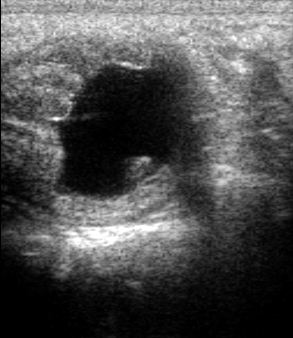
Pregnancy in a mare (23rd day after ovulation). Photo by A. Zagrajczuk, DVM, PhD
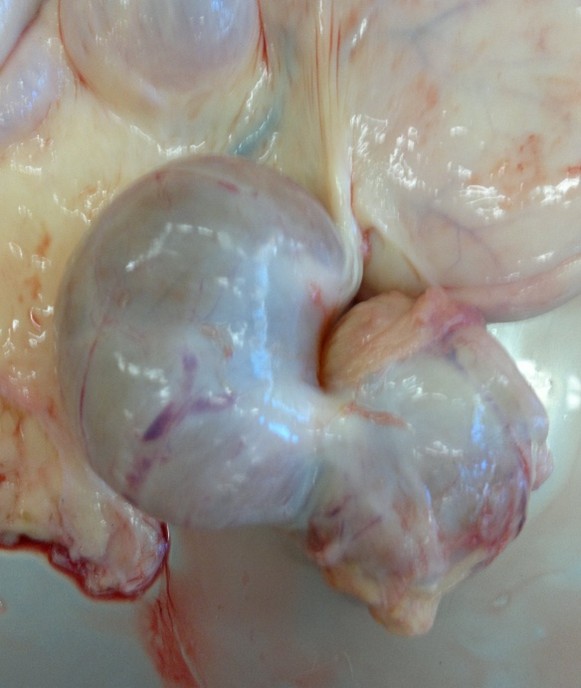
Post-mortem image of a mare’s ovary after ovulation. Photo by A. Zagrajczuk, DVM, PhD
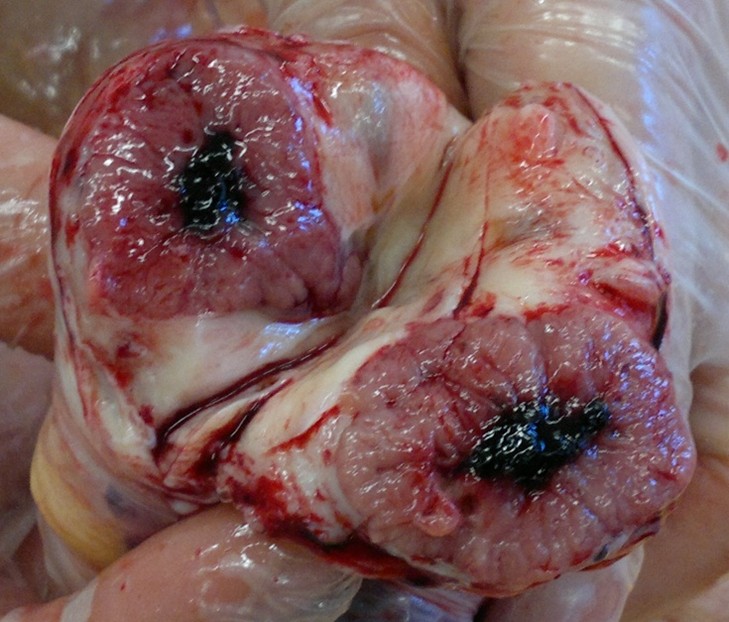
Post-mortem image of a mare’s ovary with an active, mature corpus luteum
Photo by A. Zagrajczuk, DVM, PhD
Purpose: Assessment of the stage of the estrous cycle and ovarian activity. Elevated levels are observed in pregnant mares after day 60 of gestation. A marked increase in concentration may also indicate the presence of a persistent anovulatory ovarian follicle. During a silent heat (silent oestrus), estradiol concentrations may be lower than those observed during a normal oestrus cycle.
Production site / physiological role:
ovary – preovulatory follicle
Time for testing
absence of oestrus or irregular oestrous cycles
Sample: serum 1 mL
Method: RIA
Sample collection: it depends on the purpose of the test – the stage of the oestrous cycle or pregnancy should be taken into account.
Interpretation:
< 10 pg/mL – small follicles, corresponding to the dioestrus phase / early follicular phase / seasonal anoestrus
11–15 pg/mL – medium follicles (diameter approx. 20–30 mm), corresponding to the follicular phase
> 15 pg/mL – large follicle (diameter ≥ approx. 30 mm; preovulatory follicle), corresponding to oestrus
> 30 pg/mL – suspicion of granulosa cell tumour or persistent anovulatory follicle
Advantages: routine examination for the detection of subclinical ovarian follicular activity.
Limitations: The test results should be interpreted in conjunction with ultrasonographic findings.
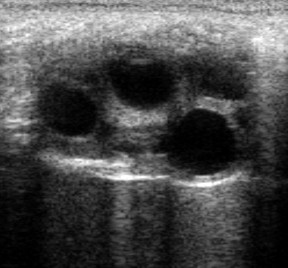
Ultrasonographic image of the mare’s ovary showing small follicles. Photo by A. Zagrajczuk, DVM, PhD
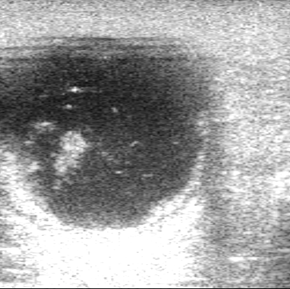
Persistent Anovulatory Follicle (PAF) – early stage of luteinisation. Photo by A. Zagrajczuk, DVM, PhD
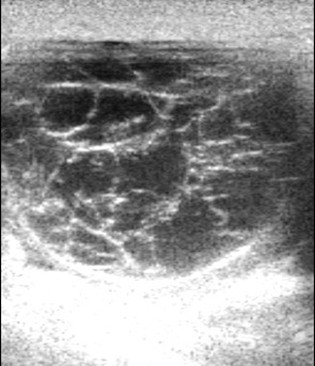
Persistent Anovulatory Follicle (PAF) – advanced stage of luteinisation Photo by A. Zagrajczuk, DVM, PhD
Purpose: confirmation of pregnancy between 40 and 120 days of gestation. Not applicable in donkeys
Production site / physiological role:
Produced in endometrial cups – foetal-derived structures embedded in the uterine mucosa of the mare, formed as a result of trophoblast cell invasion (embryonic tissue) into the endometrium during early pregnancy. Equine chorionic gonadotropin (eCG) has both FSH (predominantly) and LH activity, leading to the formation of accessory corpora lutea in mares approx. between day 40 and 45 of gestation. This mechanism ensures the maintenance of sufficiently high progesterone concentrations necessary to sustain pregnancy until it can be maintained by placental progestogens, i.e. around day 100 to 120 of gestation. Occasionally, the action of eCG may also indirectly lead to the manifestation of oestrous behaviour in pregnant mares, as eCG stimulates follicular growth, resulting in increased oestradiol production responsible for oestrous signs.
Time for testing:
suspicion/confirmation of pregnancy between days 40 and 120 of gestation. Endometrial cups undergo regression at a later stage.
Sample: serum 1 mL (chilled)
Method: ELISA
Sample collection: etween days 40 and 120 after ovulation
Interpretation: descriptive
Advantages: routine test
Limitations: Possible false-positive results – in cases of foetal death, if endometrial cups fail to regress (persistent endometrial cups), eCG concentrations may remain at levels indicative of pregnancy. Cases of endometrial cup persistence beyond 140 days of gestation have also been reported; however, these are extremely rare (approx. 1–2% of mares).
Purpose: Pregnancy diagnosis from day 80 in mares and day 120 in jennies. Results obtained after day 110 of gestation in mares are the most reliable and clinically useful. Additionally, they provide information on foetal viability and placental function.
Production site / physiological role:
Placenta – formed via synthesis from DHEA produced in the foetal gonads, with secretion markedly increasing between days 100 and 240 of gestation, after which it begins to decline. The placenta converts DHEA into “pregnancy” oestrogens, predominantly estrone sulfate.
Time for testing:
suspicion/confirmation of late pregnancy (from day 80 after ovulation)
supportive in cases of: suspected impaired foetal viability or placental insufficiency
Sample: serum 1 mL
Method: RIA
Sample collection: from day 80 of gestation (after ovulation) to approx. one week prior to the expected term of foaling
Interpretation:
Between day 80 and 100 after fertilisation, values > 10 ng/mL indicate pregnancy.
After day 100 after fertilisation, values > 100 ng/mL indicate pregnancy.
In the case of a negative result after day 80 of gestation, pregnancy is unlikely (test sensitivity 95–98%).
Prior to making any important clinical decisions, a clinical examination is recommended.
Advantages: one of the few laboratory parameters useful in the assessment of foetal welfare and placental function
Limitations: relatively long turnaround time. In the assessment of placental function and foetal viability, a sudden, clearly diagnostic decrease in E1S concentration is detectable only approx. 2 days before foetal death/abortion.
Purpose: determination of the time point at which pregnancy maintenance is taken over by placental progestogens (luteo-placental shift).
Production site / physiological role:
progesterone – produced by the corpus luteum (CL), responsible for maintenance of pregnancy until approx. day 100.
DHP (5α-dihydroprogesterone) – the main progestogen produced by the placenta with high affinity for progesterone receptors and strong biological activity
Time for testing:
To support the decision to discontinue altrenogest supplementation (between days 100 and 120 of gestation), without the risk of premature cessation of pharmacotherapy.
The result precisely indicates placental maturation.
Repeated measurements of DHP in the same mare provide additional information on normal placental function in advanced pregnancy.
Sample: serum 1 mL
Metohod: LC–MS (Liquid Chromatography – Mass Spectrometry)
Sample collection: between days 100 and 120 of gestation
Interpretation:
In non-pregnant mares or during early pregnancy, the 5α-DHP/progesterone ratio is <1. After the luteo-placental shift, around days 100–120 of gestation, the 5α-DHP to progesterone ratio is >1.
Advantages: highly accurate test.
Limitations: as a potential marker of placental inflammatory conditions, it should be reassessed through repeat measurements and interpreted alongside other parameters.
Suspicion of granulosa cell tumour
- Anti-Müllerian Hormone (AMH)
- Testosterone (T)
Other ovarian dysfunctions
- Estradiol (E2)
- Progesterone
Pregnancy assessment
- Progesterone
- Pregnant Mare Serum Gonadotropin (PMSG/eCG)
- Estrone Sulfate (E1S)
- DHP/Progesterone Ratio
(Luteo-Placental Shift)
Testicular dysfunction / cryptorchidism
- Anti-Müllerian Hormone (AMH)
- Testosterone (T)
- hCG Stimulation Test in Stallions
(2x Testosterone Measurements)
Laboratory diagnostics
made simple

Laboratory diagnostics
made simple

