pax

The company Nextmune has launched a new-generation allergy test called PAX® (Pet Allergy Xplorer). It is a molecular and fully quantitative analysis. By using both allergen extracts and molecular components simultaneously, the test enables a more precise identification of the key allergy-triggering substances.

The PAX® test is now also available for cats and horses!

In cooperation with Nextmune, we offer you a test specifically developed for animals, based on the assessment of IgE antibodies against individual molecular components within an allergen. This molecular method is successfully used in human medicine and is now also available in veterinary diagnostics.

Conventional allergy tests performed in veterinary laboratories worldwide use allergen extracts. These extracts contain both proteins responsible for triggering an allergic reaction and others that have no effect. For example, the house dust mite extract — one of the most common allergens in dogs and cats — is obtained by grinding the mites, adding solvents, and purifying the peptides. The resulting mixture contains more than 10,000 proteins, but only about 40 of them trigger an immunological reaction. This means that the extract contains only a small proportion of truly relevant peptides for the allergy. Isolating the clinically significant protein components from this mixture and analyzing the specific IgE antibodies directed against them significantly increases the precision of the test result.

technologien

CCD molecules

Thanks to the introduction of the PAX® method, it is now possible to apply CCD-blocking — used to eliminate false-positive results — also in horses! Until now, this technology was available only for allergy testing in dogs and cats.

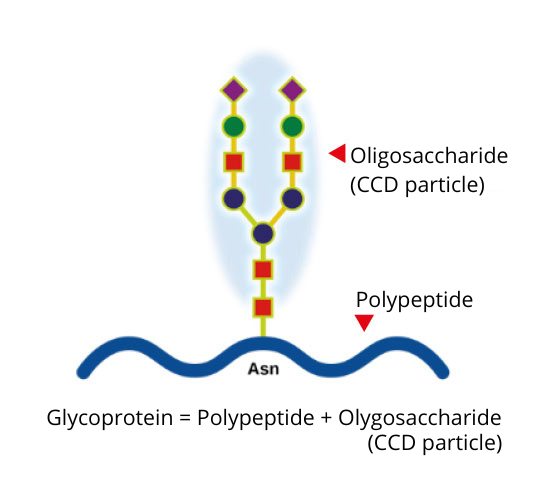
What are CCD molecules?

CCD (Cross-reactive Carbohydrate Determinants) are structural components of many allergenic proteins, especially plant-derived allergens such as pollen. During an allergic reaction, IgE antibodies are produced against both the carbohydrate chains and the protein portion of the allergens. Studies show that IgE directed against CCD particles occur in about 30% of tested animals but have no clinical relevance.

Eliminating IgE that bind specifically to CCD particles improves the correlation between in-vitro test results and intradermal tests.

Waiting time for results: 7–14 days
Test material: 0.5 ml serum

NOTE: The immune system reaches full maturity after the first year of life. For this reason, it is not recommended to perform an allergy test before the animal is eighteen months old.

Advantages of PAX® – Allergy Tests:

  • Analysis of allergen extracts and molecular components – The results provide more detailed information compared to previous serological and intradermal tests.

  • More effective CCD-molecule blocking – Only allergens that are truly involved in the allergic disease are detected.

  • Dual CCD-blocking control – After verifying the first blocking step, the process is repeated if necessary.

  • Identification of cross-reactivities – The use of isolated allergenic proteins allows identification of the primary source of the allergy.

  • More precise allergen identification – Enables a more targeted and effective hyposensitisation therapy.

  • Fully quantitative test – Results show the concentration of IgE in the sample in ng/ml.

  • Fully automated test procedure – Reduces time-consuming manual steps.

  • Only 0.5 ml of serum required – The previous generation of Nextmune+ allergy tests required 1 ml of serum.

Waiting time for results: 7–14 days
Test material: 0.5 ml serum

NOTE: The immune system reaches full maturity after the first year of life. For this reason, it is not recommended to perform allergy testing in dogs and cats before twelve months of age, and in horses before eighteen months of age.